
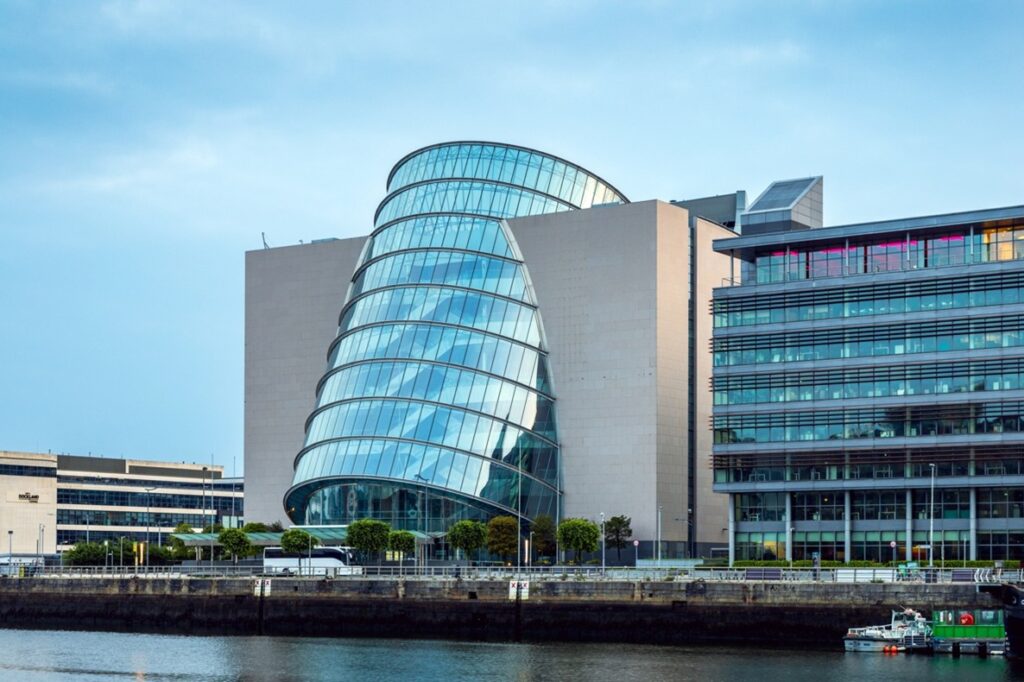
Spent the past week driving the Donegal coast before heading into Dublin yesterday. The AMEC Global Summit opens today, and the Dublin Royal Convention Centre is already filling with the people who set the global standards for how communications gets measured. If you have been watching this industry for any length of time, you know that AMEC Summit weeks are when the conversations that shape the next year of practice happen — not in the keynote room, but in the corridors between sessions, the receptions, and the side conversations after the panels.
This year, the theme is Intelligence Applied: Communicator Excellence for the Future, and the timing could not be sharper. AI has moved from novelty to infrastructure inside our workflows. Content licensing is being renegotiated in real time. The frameworks we have relied on for a decade are being asked to do work they were not designed to do. Dublin is where the global community pressure-tests what comes next.
If you missed my pre-Summit post on why this particular Summit matters more than most years, you can read it here. This one is different. This one is from the ground — or more honestly, from the hallways.
What I am watching for
Three sessions are at the top of my list — each for a specific reason that connects to the work I am doing through FIBEP and at Infoesearch.
Tuesday, 19 May, 10:00 — The “No Excuses” Era in Marketing
Anna Tsenova (Marketing Manager, A DATA PRO) is asking a question I hear from operators every week: why are we still struggling with AI on our team? The honest answer is rarely about the technology. It is about workflow design, accountability, and where humans stay in command of the output. I want to hear how Anna is framing it, because the gap between AI capability and AI integration is where most of the failed deployments I see actually live. Anna also serves on the FIBEP executive board, and she brings the same operator’s perspective there that she will bring to this session.
Wednesday, 20 May, 09:15 — PepsiCo’s GenAI Transformation
Jonny Bentwood (Global President, Data & Analytics, Golin) and Lou DeCosmo (Senior Director, Global Communications, PepsiCo) on making GenAI visibility, and being the first answer, a business-critical KPI. This is one of the most important practical sessions on the agenda. The shift from “how much coverage did we get” to “when someone asks an AI engine about our brand, what does it say first” is a fundamental change in what measurement is for. Brands that understand this early will redefine what they ask their measurement partners to deliver.
Wednesday, 20 May, 11:30 — Copyright in the Age of AI (my panel)
Hyde 2, 11:30, alongside Andrew Hughes (Secretary General, PDLN) and Jerry Ward (Managing Director, Press Data), moderated by Johna Burke (CEO and Global Managing Director, AMEC). The panel sits at the intersection of two questions every monitoring and analysis provider — and every brand that depends on them — will need a clear answer to over the next 24 months: how content licensing is being renegotiated in the AI era, and how providers should actually be deploying AI inside their service delivery without losing the human judgment clients are paying for.
I am not going to preview my answers here — you should come to the panel for those. What I will say is this: my contribution comes from a specific seat. As President of FIBEP, I started the Media Rights Trust Initiative (MRTI), a stakeholder conversation bringing publishers, media monitors, licensing bodies, and legal experts together on where content rights are heading in an AI-mediated environment. And at Infoesearch, I lead Global Media Insights for an organization operationalizing media analysis with our MAPO approach (Media Analysis Process Optimization). MAPO is our methodology for embedding AI into media analysis workflows under a human-in-command model, where analyst judgment remains the authoritative layer rather than a downstream check.
The question I am still wrestling with
Here is one I do not have a clean answer to yet, and I am bringing it to Dublin specifically to test it against people smarter than me:
Our clients and the agencies serving them are leaning heavily on AI tools and AI agents to operationalize their internal PR measurement work. The capability is real and the productivity gains are real. But how bound are those internal teams to the ethics, licensing constraints, and methodological discipline that must be in place to ensure the data they produce is actually valid? In other words: if an in-house team uses AI to ingest, classify, and interpret coverage — outside the governance of a Barcelona-Principles-aligned framework — are the numbers they put in front of the C-suite credible? Defensible? Reproducible?
I have a working hypothesis. I am not yet confident enough in it to put it on the panel. If you have been working through the same question inside your own organization, I want to hear how you are answering it.
If you want to talk — here is where I will be
Along with many others, you can find me in the hallways, at the social events, and often standing at the back of the room. If you want to compare notes on AI governance, MAPO, human-in-command analysis, or the licensing questions the Wednesday panel will get into, let me know. Message me on LinkedIn and we can connect.
The most useful conversations I have at events like this are the unscheduled ones — between sessions, at the receptions, in the line for coffee. I would rather have ten substantive conversations with people working through the same questions than fifty quick hellos in passing.
Particularly interested in talking with:
- Brand-side measurement leaders working through how to govern AI inside their own internal teams
- Agency partners trying to advise clients on the same question without a clean playbook to point at
- Monitoring and analysis providers re-architecting their delivery model and wanting to compare notes on what is working and what is not
- Publishers and licensing bodies with a view on where the next round of negotiations is heading
See you in Dublin
AMEC Summit weeks reward people who show up curious. I will be in Hyde 2 on Wednesday at 11:30. Before then, I will be in the corridors. After then, I will be in the receptions. Find me — or message me on LinkedIn and we will set something up. The conversations that matter for the next decade of our profession are starting now, at this Summit, this week.
ABOUT THE AUTHOR
 Todd Murphy is President of FIBEP, the global media intelligence association with more than 130 corporate members across 60 countries, and Executive Director of Global Media Insights at Infoesearch. As FIBEP President, he started the Media Rights Trust Initiative (MRTI), a stakeholder conversation bringing publishers, monitors, licensing bodies, and legal experts together on the future of content licensing in the AI era. At Infoesearch, he leads the development of MIPO and MAPO methodologies (Media Intelligence and Media Analysis Process Optimization) and advises the global media monitoring and analysis industry on deploying AI inside service delivery while maintaining the human-in-command methodology that defends analytical quality. With an academic background in cognitive and behavioral psychology and more than 30 years of executive operating experience in media intelligence, he writes regularly on measurement frameworks, AI governance in PR, and the future of media intelligence.